
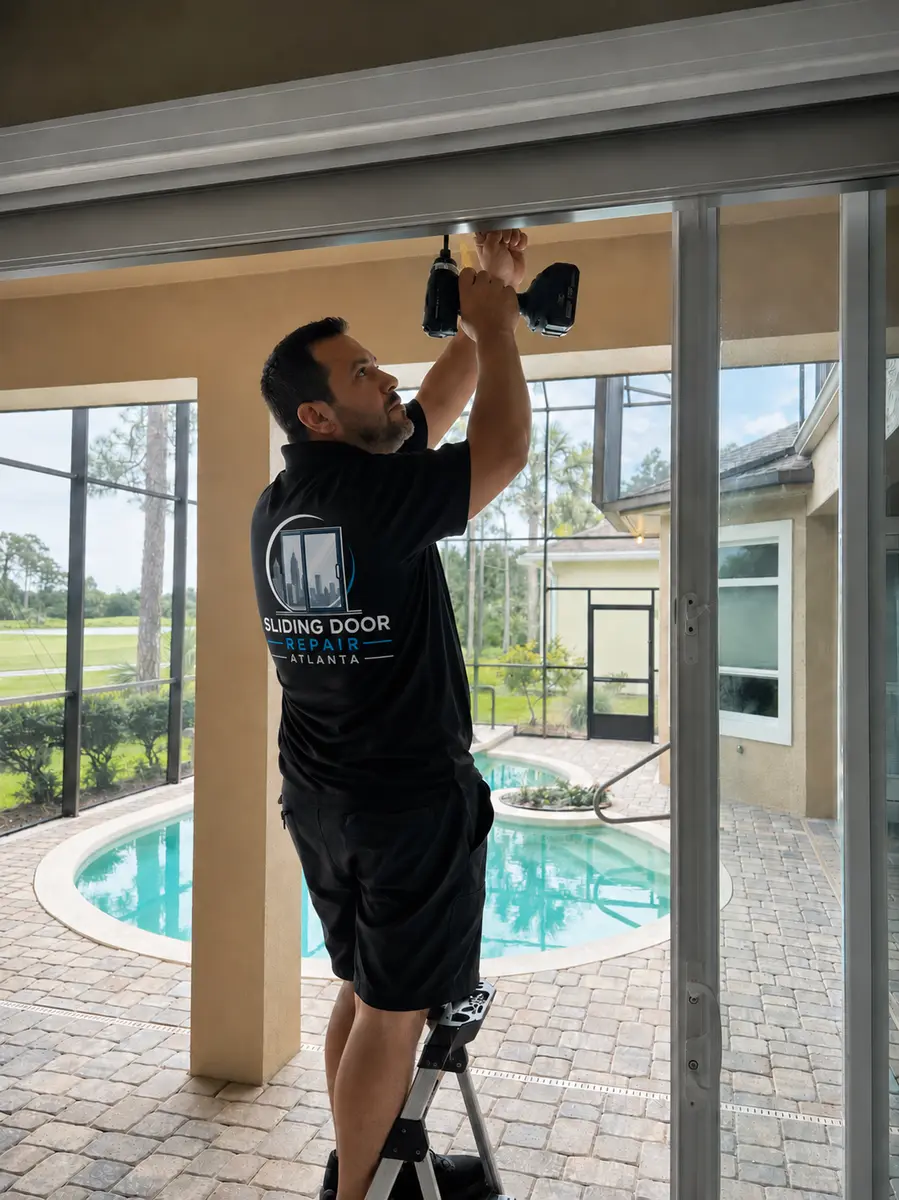
When a sliding door becomes hard to move and stops locking at the same time, those are often two symptoms of one problem. The moving panel may have dropped because a roller wore down, an adjustment shifted, or part of the frame moved. The latch then reaches the keeper too high, too low, or at the wrong depth.
Replacing the lock alone will not correct that geometry. Moving the keeper may make the latch catch temporarily, but the panel can continue dragging and place new stress on the hardware. We first look at the gaps around the panel, the contact points, roller condition, and the way the door meets the jamb.
Adjustment screws change roller height on many systems. A careful adjustment can square a healthy panel, but it has limits. If the internal housing is cracked or the wheel is collapsing, repeated adjustment only raises the mechanism until it fails again. Excessive height can also affect top clearance and anti-lift engagement.
The sequence matters: repair or replace failed movement components, restore panel position, verify smooth travel, then align the lock and keeper. On multi-point systems, every locking point must engage without forcing the handle. On a basic mortise lock, the hook needs proper clearance and secure keeper engagement.
Homeowners can perform a visual check by closing the panel slowly and watching whether the vertical edges remain parallel. Look for fresh rubbing marks and note whether lifting the handle side makes the latch line up. Do not continue slamming or lifting a heavy glass panel to secure it.
Can foundation settling cause a sliding door problem?
Building movement can affect openings, but roller wear and adjustment issues are also common. The door system should be inspected before drawing a structural conclusion.
If your door drags and the lock misses, schedule combined **alignment and adjustment** and lock diagnosis using the form below.