
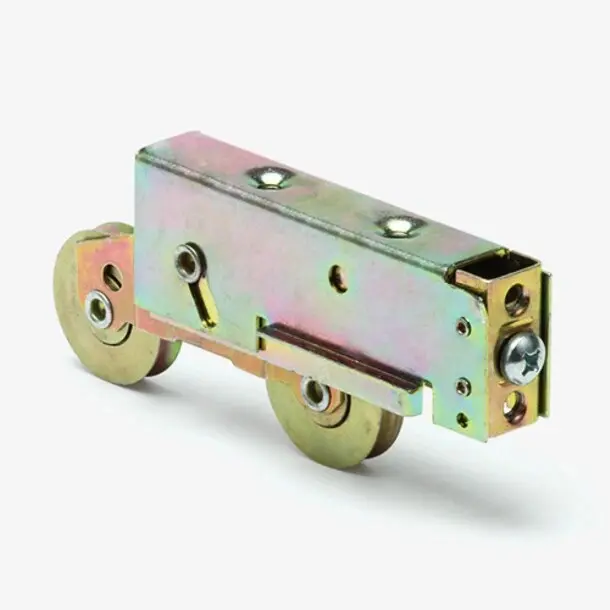
A handle carries more load when the door is difficult to slide. Customers often replace a cracked pull only to break the new one because the failed rollers or damaged track were never corrected. The handle is the point where the symptom appears, not always where the problem began.
Fit matters. Handle sets vary in mounting-hole spacing, thickness, keyed configuration, thumb-turn position, tailpiece shape, and compatibility with the internal lock. Drilling new holes casually can weaken the stile or interfere with hidden components.
We first move the door and assess resistance. Then we inspect both handle halves, fasteners, spindle or tailpiece, mortise mechanism, and keeper. A loose assembly may need correct fasteners and support; cracked or incompatible components need replacement. Afterward, the door should move without requiring the customer to use the handle as a lever.
Can any pull handle be installed if the screw spacing matches?
Matching holes are only one requirement. Lock actuation, door thickness, clearance, and component geometry also matter.
Use the form below for handle and lock diagnosis in metro Atlanta.