
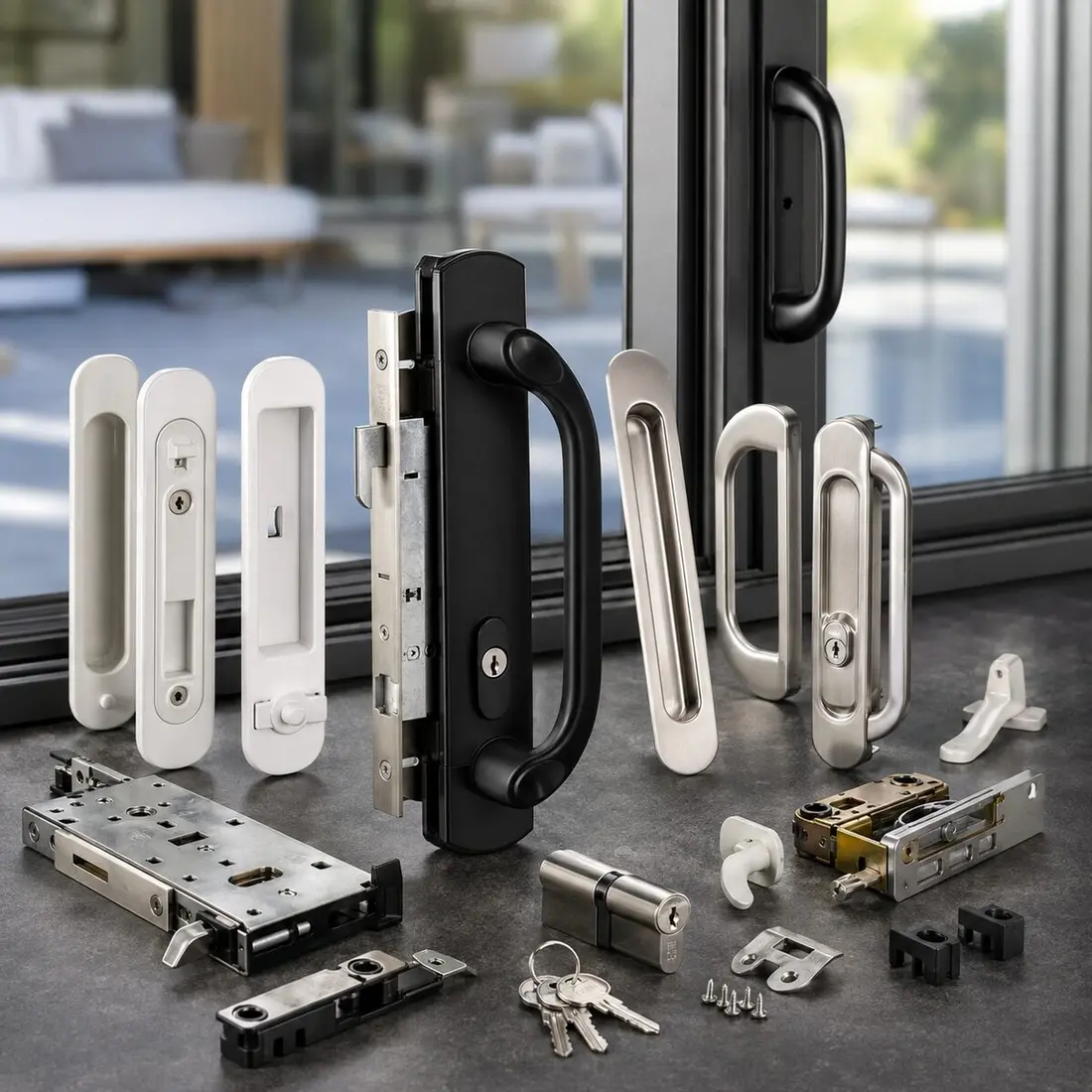
When a latch misses its keeper, replacing the lock is not always the answer. Sliding-door security depends on several parts meeting at the correct height and depth: the handle moves a spindle or actuator, the mortise mechanism extends, the hook enters the keeper, and the panel remains square against the jamb.
If a roller collapses, the panel drops and the hook may pass below the keeper. If the panel does not close fully because of debris or track damage, the hook may not reach it. A loose keeper can also shift. Each condition feels like “the lock is broken,” but the repair is different.
Close the door gently and observe the gap. If lifting the handle side makes the lock line up, alignment or roller condition deserves attention. If the handle moves without resistance, the actuator, tailpiece, or internal mechanism may be damaged. Never repeatedly force a handle; small cast components can break and fall inside the stile.
Our lock diagnosis starts with door movement and panel position before hardware is replaced. Once the panel is stable and aligned, we inspect the handle, mortise body, hook, keeper, mounting points, and key operation. This system-level approach prevents a new lock from being installed into a door that is still physically out of position.
Can the keeper simply be moved?
Sometimes minor keeper adjustment is appropriate, but moving it to compensate for failed rollers can hide the cause and reduce dependable engagement.
For Atlanta **sliding door lock repair**, call 470-942-3751 or use the form below.