
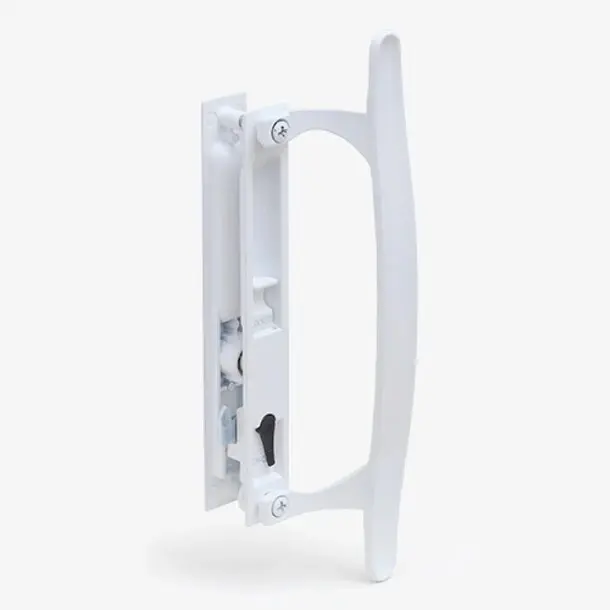
A mortise lock sits inside the narrow vertical edge of many sliding glass doors. You may see only the faceplate and hook, but the body contains the mechanism that turns handle movement into locking action. Small differences in faceplate length, screw spacing, backset, hook direction, and actuator position determine whether a replacement fits.
That is why buying a lock by appearance alone often fails. Two units can look nearly identical while placing the hook at a different height or accepting a different tailpiece. Older doors may carry no readable label, and the original model may have been discontinued.
Symptoms help narrow the fault. A floppy thumb turn may indicate a broken actuator or handle tailpiece. A hook that extends but will not catch suggests keeper or panel alignment. A mechanism that jams outside the door may need replacement; one that works outside but binds when installed may be under stress from incorrect fit or bent hardware.
Before removing screws, remember that an unsecured mortise body can fall into the hollow stile. Heavy panels also should not be adjusted casually to accommodate a guessed part. We measure the original hardware, identify compatible options, check the door’s position, and test secure engagement after installation.
Are mortise locks universal?
No. Exact dimensions and operating geometry matter, even when online listings describe a part as universal.
Submit the form below for mortise-lock identification and repair in Atlanta.