
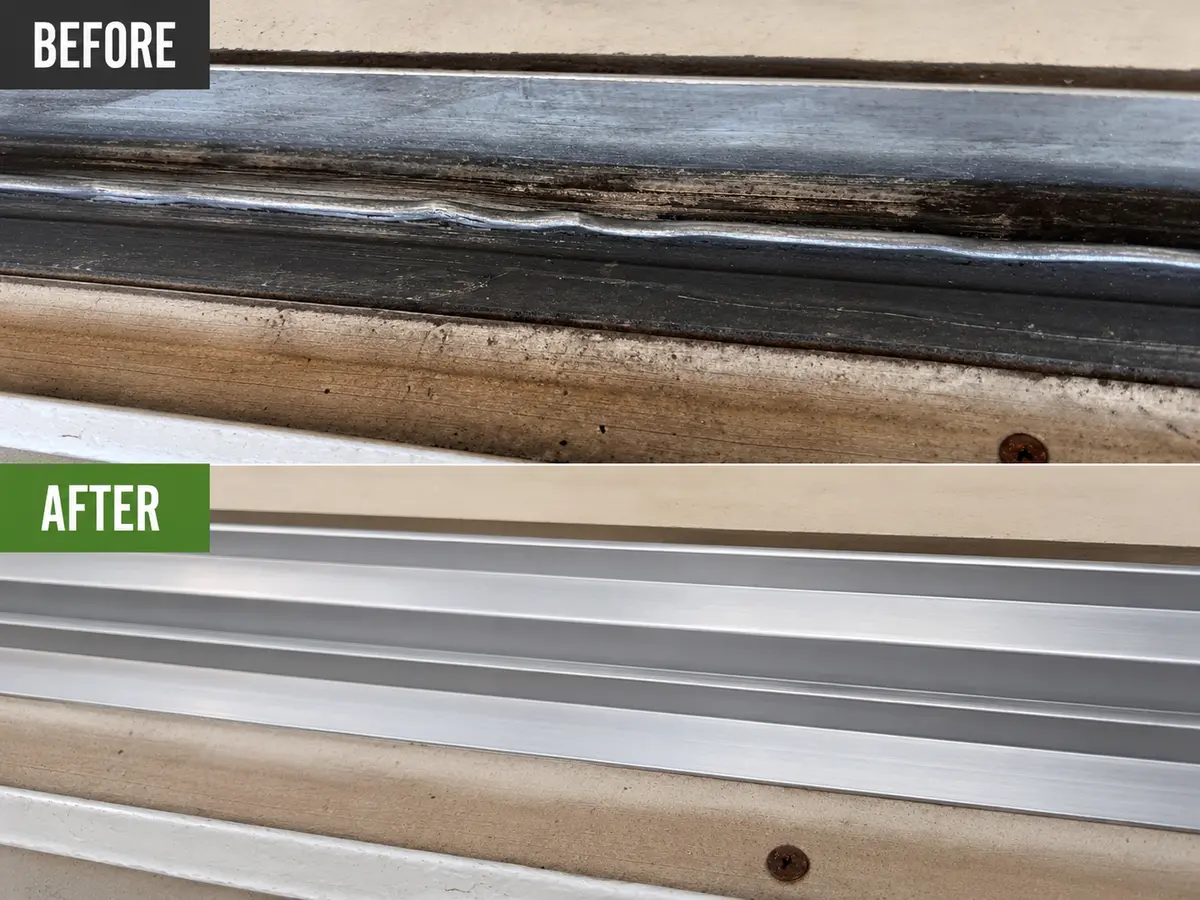
Some sliding-door thresholds are designed to collect incidental water and direct it outside through channels and weep openings. Seeing moisture in the exterior portion of a track after wind-driven rain is not the same as water crossing into the room. The important questions are where the water begins, whether it drains, and whether the interior finishes become wet.
Debris can block small drainage paths. Paint, sealant, insects, and compacted dirt can do the same. A panel that is out of alignment may compress weatherstripping unevenly. Failed perimeter sealant or building-envelope conditions above and beside the door can also deliver water that appears to be a track leak.
Do not solve the issue by filling every opening with caulk. Blocking designed drainage can trap water inside the frame. Document the leak during rain if safe, note wind direction, and inspect interior flooring and trim.
Should a track be completely dry after a storm?
Design varies. Limited water in a managed exterior channel can occur; overflow, standing water that will not drain, or interior leakage needs evaluation.
Use the form below and include when and where water appears.